Added to Cart
×
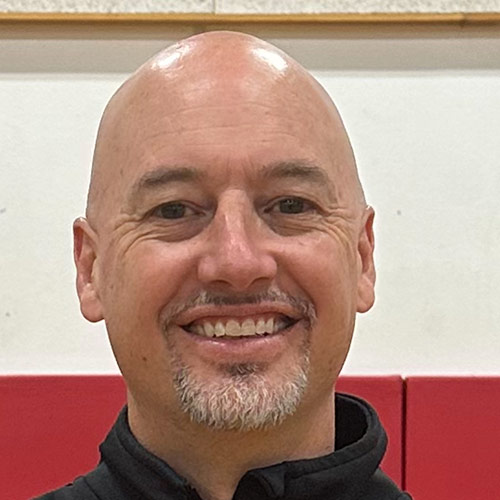
Shawn Jones
DIRECTOR, ATHLETICS
Shawn has 30 years of head basketball coaching experience combined with 11 years as an athletic director. He has coached in Colorado and Texas, and has taken teams to three Final Four tournaments and a state championship. He has seen numerous players of his continue on to compete at the college and professional level of the sport. He is also proud to have seen many of his athletes become high school and collegiate coaches themselves. As director of athletics, Shawn is a key member of Ballogy’s team, driving the company’s athletic strategy, partnerships, coach engagement, and product vision. He has been married to his high school sweetheart for 32 years and they have raised three wonderful children together. Shawn has a passion for player development and the desire to assist coaches with effective, time-saving tools of administering and assessing skill development drills.

There is a fine line between holding players accountable and still allowing them the freedom to find confidence in themselves and their skills. Coaches want perfection, or at least they should. Will they ever get perfection? No. That’s why they should push for it and hold players accountable to try to reach it; in the process, players will achieve more and find more success by being held to the higher standard. But somewhere in the mushy middle is the player’s confidence.
How does a coach demand perfection and accountability, and still keep his or her players confident? Let’s look at some ideas:
Don’t micromanage. Nobody likes to be micromanaged. You can deliver a framework of expectations or instructions and then allow your players to rattle around within that framework. Let them find their ownership of your expectations while exploring their own style and creativity.
Pick the non-negotiables and stick firmly — but only have a small handful. You can be a stickler on a small number of things that you feel must be done exactly the way you want. Let’s use closing out to the sideline as an example. You cannot allow closing out to the middle, it doesn’t give your system success. Stick to that hard line. Now, can you allow flexibility on HOW players close out to the sideline? Some come out chopping their feet old-school style, another flies out there on a dead sprint. As long as neither gets beat to the middle or straight line toward the goal, can you live with them doing it their way and still getting the ball to go down the sideline to the corner?
Another great example is playing off two feet. I know many good coaches who demand players use two-foot jump stops in the paint. They go ballistic at one-leg step-throughs or rim attacks. But if you have a player who excels at playing off one leg, doesn’t pick up offensive fouls, and finishes at a high rate, do you need to demand he or she plays off two feet? Is that a hill to die on, demanding accountability over confidence? I can’t answer that for you. I only know that if my player can finish at a high rate, I don’t care if it’s my way or not. He gets it done, and that’s that. If he can’t get it done his way, then certainly he’s going to do it my way. But until then, if he’s filling up the basket, I’m going to just watch the show.
Communication is key. Even in the times that you must hold players accountable to do it your way every time, the way it is communicated is probably more important than the topic itself. Players just want to know WHY. Give them the value to the team’s success. Explain the WHY, and the accountability comes easier. Don’t explain the WHY — leave it dangling out there like “Cuz I said so” — and your accountability is constantly challenged. Show the method to your madness. (The community thinks you’re mad, anyway.)
Reward compliance long before critiquing failure. To get confident players who do what you want them to do, you have to begin by REWARDING them for doing what you asked — success or failure! Get them bought in to the fact that doing what you asked creates praise. Then, when they are successful doing what you asked, it should elicit DOUBLE PRAISE! Reinforce your accountability by praising compliance and live with the results. They will get better and better.
Those five ideas are just a starting point — but none of them work without this last piece:
Get accountability in your program while still fostering player confidence. And here’s one last little hint. Focusing on the relationships with your players will foster their CONFIDENCE in you, which will foster them being more ACCOUNTABLE, which will help them be more CONFIDENT in themselves, and make the team more SUCCESSFUL!
Let’s GO!!!